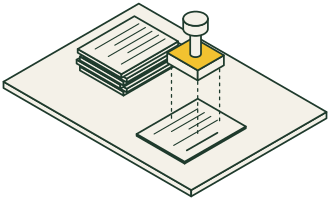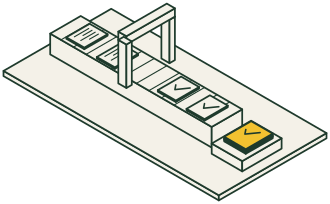
“Automation” sounds like something for factories and big companies. In a small business it usually means something much plainer: the order that no longer has to be retyped, the invoice that goes out when the job’s done, the reminder nobody has to remember to send.
A quick test for any task
Pick a job your team does and ask four questions. The more answers are yes, the better a candidate it is.
- Does it happen every week, or every day?
- Could you write the steps down for a temp on their first morning?
- Does it involve copying something from one place into another?
- Does it go wrong, or wait, when the one person who does it is off?
The jobs that usually come off first
Every business is different, but the same kinds of work turn up again and again. These are the ones we’re asked about most.
Enquiries and customers
New enquiries logged and answered straight away with real appointment slots, and follow-ups sent if nobody replies. At the maintenance firm on our What we build page, a leaking-roof enquiry gets a reply with two visit times two minutes after it arrives.
Orders
Orders read from email, WhatsApp photos and voicemail, matched to your products and entered into the system. Anything unclear is checked with the customer before it reaches the picker.
Quotes and invoices
Quotes drafted from site photos and voice notes using your own prices, and invoices raised in your accounting software the moment a job is marked done.
Getting paid
Overdue invoices chased in your tone, a little firmer each time. Promises to pay are noted, and only disputes come to you.
Staff, rotas and compliance
Sickness cover found from the people who are free and qualified, timesheets chased and checked, and certificates and right-to-work documents flagged before they expire.
Reporting
The Monday report that used to take a Sunday evening, put together from your accounting software and other systems and explained in plain English.
What to keep for people
Some work should stay with you and your team, even if it could be automated.
- Judgement calls. Whether to release an order for a customer who’s over their credit limit is your decision. An agent can make sure you know about it in time.
- Relationships. A difficult conversation with a good customer shouldn’t come from a machine.
- Rare jobs. If it happens twice a year, it’s rarely worth the effort of automating.
- Anything you can’t yet explain. If the steps change every time, sort out the process first.
The best automation does the legwork and hands you the decision. You stay in charge; you just stop doing the typing.
Where to start
Start with the job everyone dreads. It’s usually repetitive, it usually involves copying, and getting rid of it does more for morale than anything on a feature list.
Then count the hours. Ask each person to note, for one ordinary week, the time they spend retyping, chasing and checking. The total is usually bigger than anyone expects, and it tells you where to begin.